

Expanding the Pot: Creating Environments Where People Can Flourish
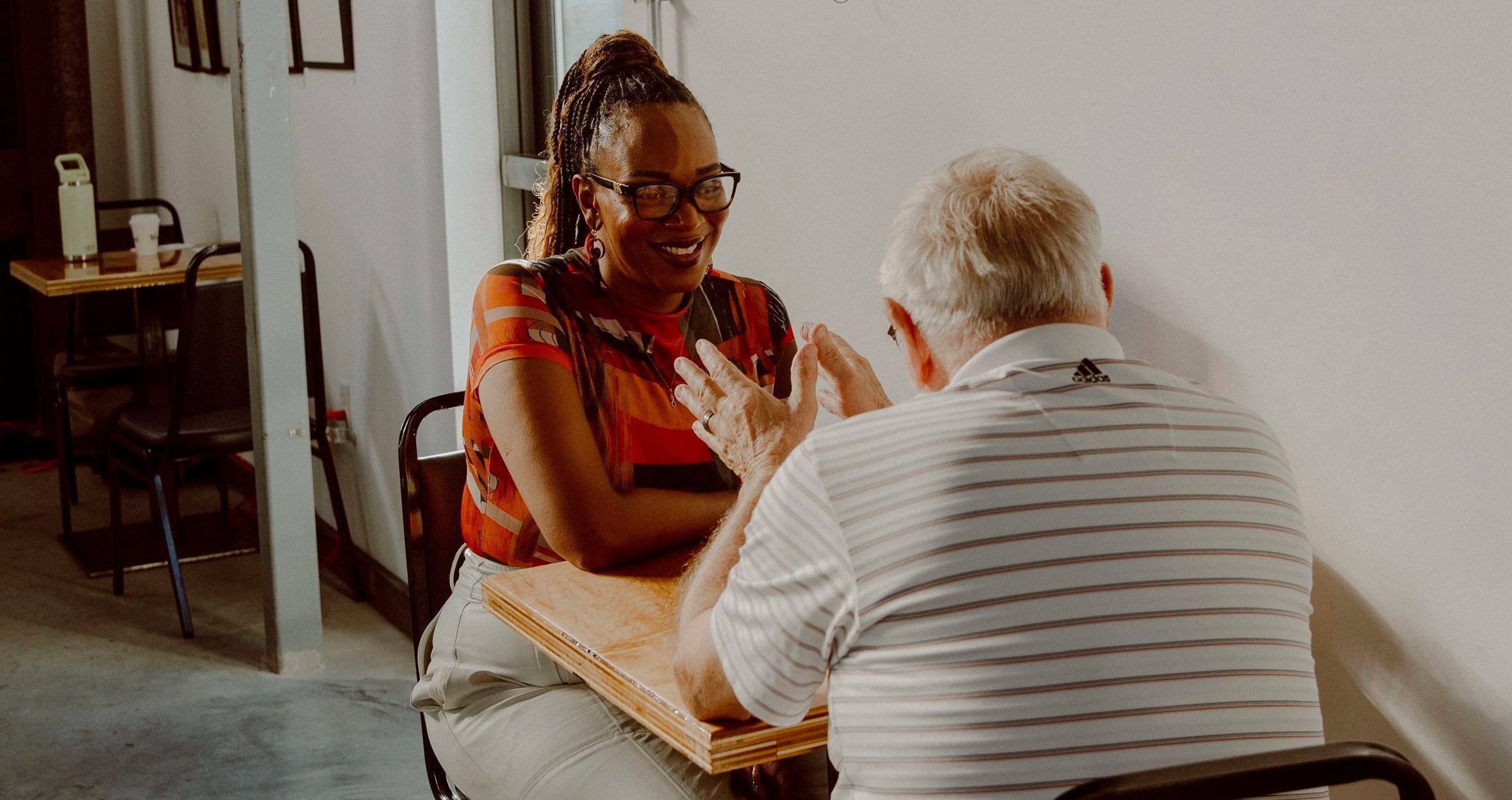
“Why growth requires more than individual effort” by Kimberli Anding
For much of my life, I believed strength meant silence.
I believed strong people handled their problems privately.
Strong people pushed through.
Strong people did not ask for help.
Looking back, I now understand that what I thought was strength was actually survival.
And survival, while necessary, is not the same as growth.
One of the most powerful images I have come to understand is what some call the
flowerpot principle:
A plant can be healthy, watered, and cared for, but if the pot is too small, growth
eventually stops. The roots begin to circle inward. The very container that once
supported life becomes the thing that limits it.
The plant is not failing.
The environment is no longer sufficient for what the plant has the potential to become.
That realization helped me better understand my own life, and the lives of many
individuals and families navigating poverty, trauma, and systems that were never
designed with their full humanity in mind.
When Survival Becomes the Goal
I grew up in a household where survival required silence.
From the outside, everything looked stable. Faith was central to our family identity.
Respectability mattered. Appearances mattered.
But inside the home, there were experiences that created instability, fear, and confusion
that shaped how I understood safety, trust, and voice.
When my mother found the courage to leave when I was 13, our lives changed
dramatically. As the first-born child, I stepped into responsibilities that required me to
grow up quickly. I helped care for my younger siblings while my mother worked tirelessly
to provide for our household.
Like many families, we encountered systems that did not always respond in ways that
felt supportive. Child support orders existed, but accountability did not always follow.
Stability often depended on how much we could endure rather than what resources
were available.
Without realizing it, I learned an important lesson very early:
Handle things on your own.
Do not expect systems to help.
Do not rely on others too much.
I carried those lessons into adulthood.
The Hidden Cost of Silent Struggle
As a single parent, I made a decision that I believed would protect my dignity: I chose to
struggle quietly.
I did not rely on a village.
I did not seek available resources.
I did not share how overwhelmed I felt.
Not because support did not exist — but because I believed needing help meant I had
failed.
I had watched how instability affected my mother and our household, and I did not want
to build hope around systems I feared might fall short.
What I did not understand at the time is that silence can create another form of poverty
— isolation.
And isolation makes challenges heavier than they need to be.
Over time, I began to notice something important:
Many families were experiencing similar struggles — balancing work, caregiving
responsibilities, financial pressure, and the emotional weight of wanting better
opportunities for their children.
Yet many of us were navigating these realities quietly, believing we were alone.
When Systems Help Us Grow
Growth often begins when even one relationship creates space for something different.
Part of that shift came through advocating for my child’s educational journey. Learning
how to ask questions, seek clarity, and request support changed how I saw both myself
and the systems around me.
I began to understand that systems are not only structures — they are relationships.
When relationships are built on dignity and mutual respect, new possibilities can
emerge.
Support does not always come in the form of immediate solutions. Sometimes it comes
through:
someone listening
someone explaining options
someone helping translate complex processes
someone reminding us that our challenges do not define our worth
These moments create room for roots to grow deeper.
Rethinking What Support Means
Over time, my perspective began to shift.
Through my work in the nonprofit sector, I have seen how often people delay seeking
support — not because they lack motivation, but because they carry shame, fear, or
past experiences of being misunderstood.
Many people are not asking, “Where can I find help?”
They are asking, “Will I be respected if I do?”
Rethinking poverty requires us to rethink how we define strength.
Strength is not pretending everything is fine.
Strength is not carrying every burden alone.
Strength is not avoiding support.
Strength can also look like:
asking questions
building relationships
exploring available resources
allowing others to walk alongside us
When we reduce stigma around support, we increase possibility.
From Managed Pain to Meaningful Power
That understanding now shapes the work I am privileged to be part of at Multiethnic
Advocates for Cultural Competence (MACC), where we partner with organizations and
communities to strengthen understanding, collaboration, and culturally responsive
practices.
This work is deeply personal.
Because I understand what it feels like when systems feel distant.
And I understand the difference it makes when systems create space for dignity.
This journey has also led me to begin developing The JEWEL Collective, a community-
centered nonprofit dedicated to supporting individuals and families impacted by abuse,
trauma, and life challenges through advocacy, education, wellness resources, and
holistic support services.
The vision is simple: healing should not require people to navigate hardship alone, and
growth should not be limited by lack of access to supportive environments.
The JEWEL Collective reflects what I have learned personally: when people are met
with dignity, support, and opportunity, transformation becomes possible.
My hope is to help create environments where people can maintain their sense of value
while receiving the care and opportunity needed to grow.
Where asking for help is seen as wisdom, not weakness.
Where growth is expected — not restricted.
An Invitation to Rethink the Environment
If we want to rethink poverty, we must also rethink how people access support.
Many individuals do not lack effort; they are navigating environments that were never
designed with their full humanity in mind.
What might change if we assumed people are doing the best they can with what they
have?
What might change if we designed systems that expect growth instead of merely
measuring stability?
What might change if asking for help was viewed as wisdom rather than weakness?
Each of us has the opportunity to expand the environments around us — in our
workplaces, our communities, our institutions, and our relationships.
Because when environments expand, possibilities expand.
Growth is not just an individual responsibility; it is a collective one.
Let’s build systems big enough for people’s roots.
Together.
Kimberli Anding is a member of the Change Leader Alliance and (Founder of The JEWEL Collective?). To learn more about the Change Leader Alliance or The JEWEL Collective go to: thinktank-inc.org/cla or reach out to Kimberli at info@theJEWELcollective.org.